Most bad used-car purchases in Kenya aren't really about the car. The car's usually fine. It's the seller who wasn't upfront about the logbook, fudged the mileage, or got vague the moment you asked where the vehicle actually came from. Picking the right dealer matters as much as picking the right model when you're hunting for the best used car for sale in Kenya—and it's the step most buyers rush through fastest, usually because they're already excited about the car itself.
What Makes a Used Car Dealer Reliable?
There's no single test for this, but a pattern shows up once you've dealt with a few dealers. The good ones hand over documents without making you ask twice. They'll let a mechanic you brought yourself crawl over the car instead of hovering and rushing you. Ask the same question on two different visits, and you get the same answer both times—not a slightly better story the second time around. And they've got an actual address, not just a phone number and a WhatsApp catalogue that could vanish tomorrow.
Showroom dealers with a track record tend to hold up better on these points than someone selling one car out of a car park. Eleven Motors operates from a fixed showroom in Nairobi's Two Rivers rather than a pop-up yard, which is worth checking for whichever dealer you end up talking to—this one or otherwise.
How to Check a Used Car's Condition
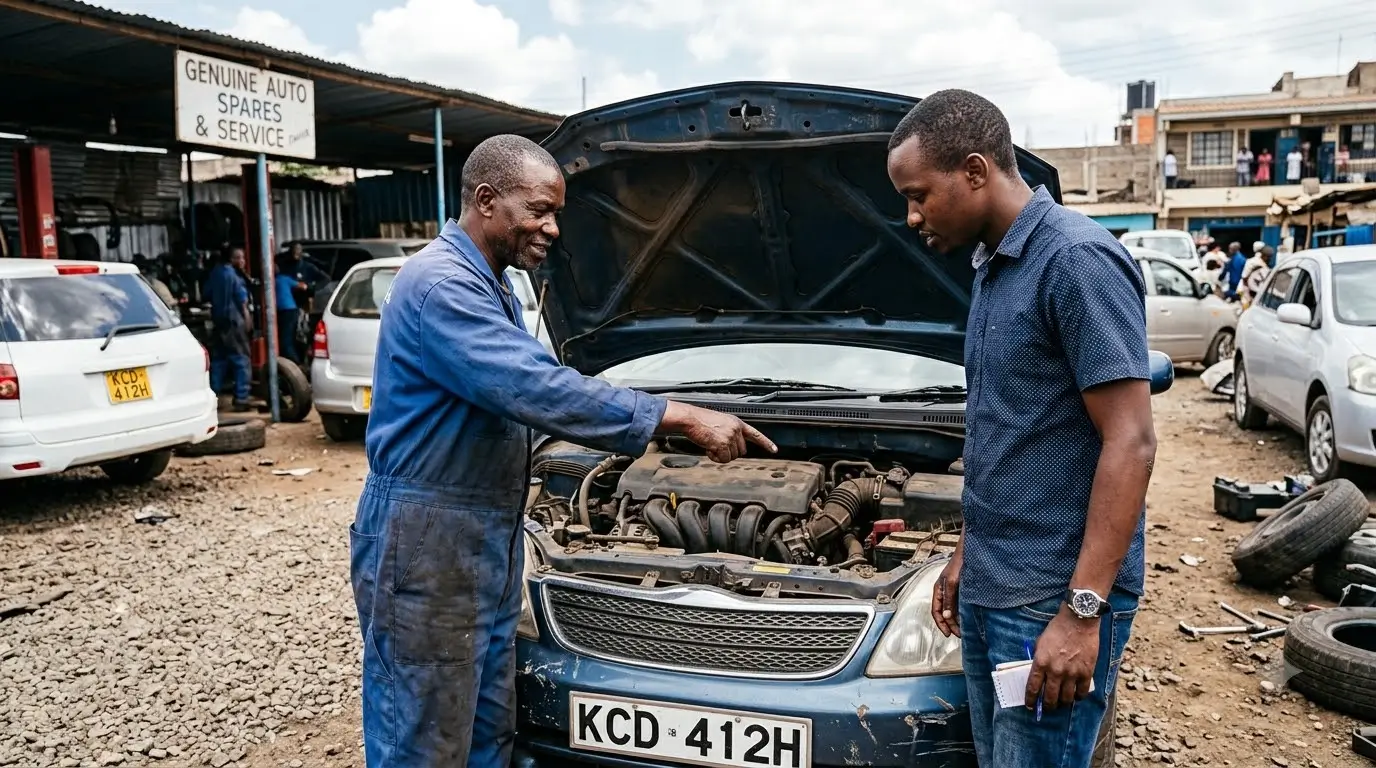
Begin by inspecting what is visible without any tools. This entails examining the tyres, brake pads, suspension, and the paint quality, which may not be uniform. Next, open the bonnet and inspect the presence of foreign fluids and rust within the engine region and check if the battery is new compared to everything else around it. That last one's a small thing, but it's often the tell that something's already been patched up once.
If you're not confident doing any of this, pay for it. A pre-purchase inspection from an independent mechanic in Nairobi typically runs KES 3,000–5,000. Against a car worth millions, that's nothing, and most dealers with nothing to hide won't blink at the request. The ones who do—that's useful information in itself.
Why Vehicle History Matters
Mileage alone tells you almost nothing. A car that's covered less distance but was serviced badly can be a worse buy than one that's done more kilometres under proper care. Ask for whatever service records exist. Then check the chassis and engine numbers stamped into the vehicle against what's printed in the logbook—every digit should match, no exceptions.
With cars imported from Japan to Kenya, ask where they were sourced and whether import paperwork is available. Accident history and real mileage on a foreign-market vehicle are genuinely harder to trace without it.
| Check | Why It Matters |
|---|---|
| Service records | Shows whether maintenance was regular or reactive |
| Logbook vs. chassis/engine numbers | Confirms the vehicle hasn't been misrepresented |
| Import documentation | Clarifies origin and helps explain mileage or accident history |
| Ownership history | Fewer previous owners usually means less accumulated wear |
Documents to Check Before Buying a Used Car in Kenya
Beyond the logbook: the seller's ID, confirmation there's no outstanding loan against the car, and for imports, the original customs paperwork. Ownership transfer itself runs through NTSA's TIMS platform on eCitizen now, and the buyer has 14 days from purchase to complete it. Until that transfer clears, the car is still legally the seller's—so it's worth asking upfront whether they're actually set up to process it quickly, rather than finding out after you've paid.
Keep copies of everything. Logbook, sale agreement, and warranty terms, if any. Photos on your phone are fine. Just don't skip it.
How to Go About Test Driving Used Cars
A five-minute spin around your neighbourhood would not amount to much. You need to push the vehicle, which means hard acceleration, sudden stops, and a couple of turns at relatively high speeds, not speeds where you barely crawl. It is also important to avoid any warning lights, knocks, or vibrations while steering.
Warranty and Support
Not every used vehicle has a warranty. Where one's offered, get it in writing—duration, what's actually covered, what's excluded, and how you'd file a claim if something failed next month. Verbal promises about warranty coverage tend to get vaguer with time. Paper doesn't.
Questions to Ask a Used Car Dealer
Where did the car come from? Does the mileage line up with the service history? What does the warranty actually cover, if there is one? How will ownership transfer be handled, and how soon? Financing's worth a mention if you're not paying cash, but don't let it crowd out the questions about the vehicle itself—that's the part people forget when a good rate is on the table.
How to Compare Dealers Before You Buy
Once you've got two or three sellers in mind, put them side by side instead of judging each on its own. A dealer with a visible showroom and a decent amount of stock, like Eleven Motors' current listings, gives you more to compare in a single visit than driving across Nairobi chasing one car at a time. The exact number of vehicles on a lot matters less than whether you're free to view, inspect, and compare without someone standing over your shoulder.
In Short
It comes down to a handful of checks: documents handed over without a fight, a car you're actually allowed to inspect, a history that holds up against the logbook, and clear answers on warranty and ownership transfer before any money changes hands. Get that right, and the make and model become the easy part.
If you want to avoid guessing, just visit Eleven Motors and see their vehicle inspection process firsthand.
FAQs
How can one determine if a second-hand vehicle dealer in Kenya is genuine?
You should ask for the vehicle logbook, proof of absence from any encumbrances as regards the car, and proof of a permanent location that the dealer occupies for their operations. If they refuse to comply with these requests, turn away.
What is the easiest way to detect a vehicle that has not been described honestly?
Compare the vehicle chassis and engine numbers to the logbook information. If they do not match, even slightly, it is best that you no longer engage with the seller.
How long do I have to transfer ownership after buying a used car in Kenya?
Fourteen days from purchase, done through NTSA's TIMS platform on eCitizen. Until it clears, the car's still legally registered to the seller.
Is it necessary to have a third-party inspection performed even if the seller claims that the vehicle is in a great condition?
Yes. It costs only a fraction of the car's price and can uncover issues even the seller might not know about.
Do second-hand car dealers in Kenya offer warranties?
Depends on the dealer. Where one's offered, get the duration, covered parts and claims process in writing before you count on it.